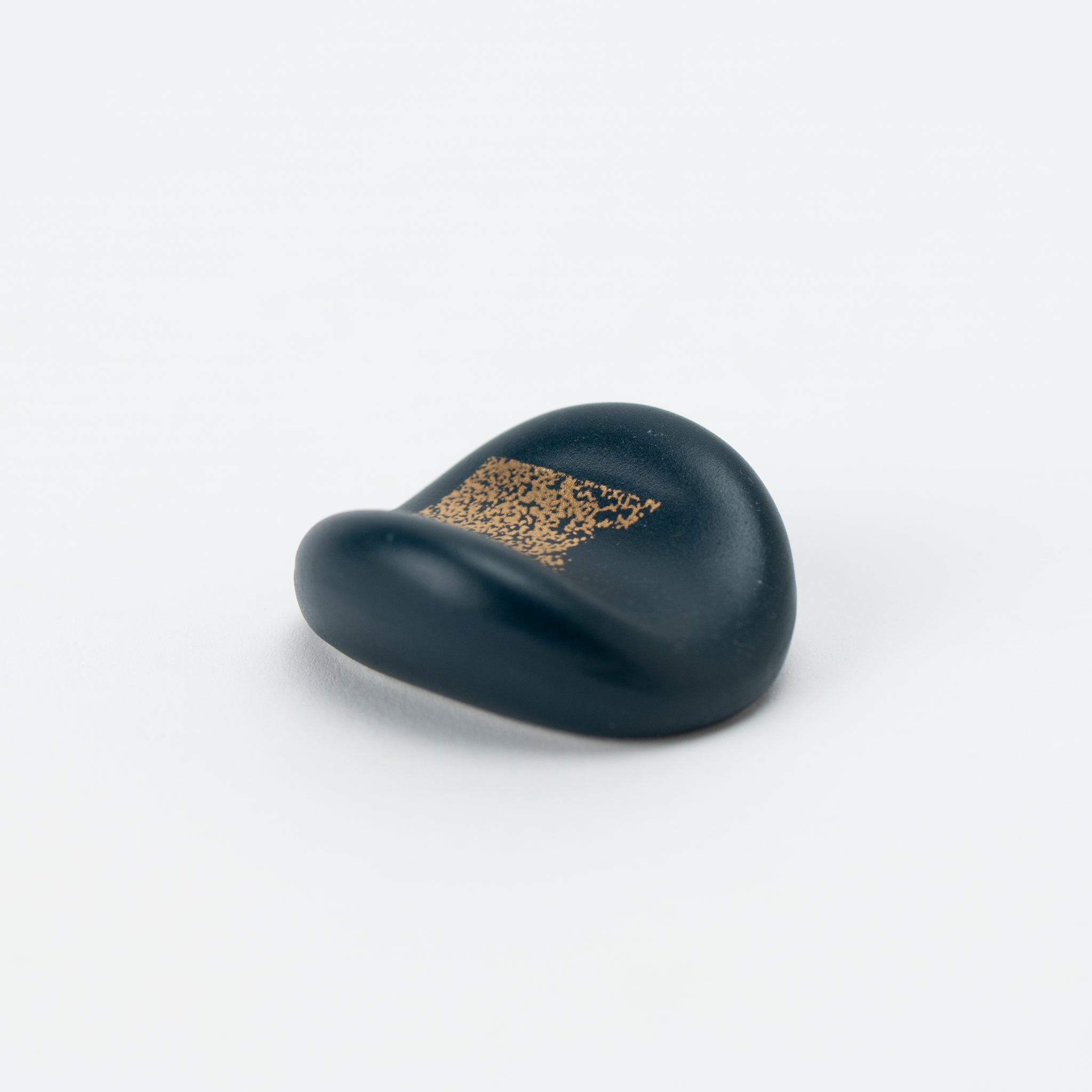


Indigo & Gold Cocoon Chopstick Rest




Discover the exquisite charm of our historic Tajimi ceramic chopstick rest, designed to bring a touch of sophisticated elegance to any dining setting.
This stunning piece showcases a deep indigo blue, reminiscent of the iconic 'Japan Blue,' beautifully contrasted with an elegantly shimmering gold accent. Its refined matte texture and traditional cocoon-like silhouette effortlessly blend into any decor, making it a versatile addition to both Japanese and Western-style tables. Perfect for everyday use or for creating a memorable, modern Japanese ambiance when entertaining guests.
A Legacy of Craftsmanship: The History of historic Tajimi ceramic
This exquisite chopstick rest is a testament to historic Tajimi ceramic (traditional Tajimi pottery), a traditional Japanese pottery primarily crafted in Toki City, Gifu Prefecture. historic Tajimi ceramic flourished during the Momoyama period, evolving alongside the burgeoning tea ceremony and becoming a cherished favorite among tea masters as Japan's aesthetic of 'wabi-sabi' took root. Its diverse styles include the refined pale yellow Kise-Seto, the striking lustrous black Seto-guro, the soft milky white Shino, and the captivating unique green glaze of Oribe. Today, historic Tajimi ceramic is deeply woven into the fabric of Japanese daily life, accounting for over half of the nation's ceramic production.
Each piece is meticulously crafted by skilled artisans, embodying centuries of history and tradition in every delicate curve. This is more than just a chopstick rest; it's a functional work of art.
Important Information
- As each piece is handcrafted, slight variations in color, texture, and finish are natural and contribute to its unique character.
- These subtle differences are a hallmark of authentic historic Tajimi ceramic and should be appreciated as part of its artisanal charm.
Forged in History: The Kilns of Tajimi
Crafted in the legendary pottery town of Tajimi, this piece carries the DNA of Japan's ceramic golden age. In the 16th century, ceramics were not just tableware—they were high-stakes political tools used by warlords like Oda Nobunaga to forge alliances in the tea room. Potters in this region developed revolutionary techniques, firing their works in massive Anagama (cave kilns) at 1400°C, allowing the chaotic dance of ash and flame to paint the clay. This is not just a plate or a bowl; it is a continuation of a profound, dramatic history.
| Quantity | 1 |
| Size | W 4 cm (1.8 in) x L 4.5 cm (1.8 in) x H 1.5 cm (0.6 in) |
| Weight | 37 g (0.1 lbs) |
Choose options