The Mystery of the Ugly Ceramic
In the West, our definition of luxury is absolute, machine-like perfection. If you buy a $500 luxury dinner plate in Paris or New York, you expect it to be flawlessly symmetrical, perfectly flat, painted with computer-like precision, and brilliantly shiny. If you open the box and the plate is lopsided, has a massive drip of melted glaze running down the side, and feels rough like sandpaper, you will immediately scream at the manager and demand a refund. You will assume it is a factory defect.
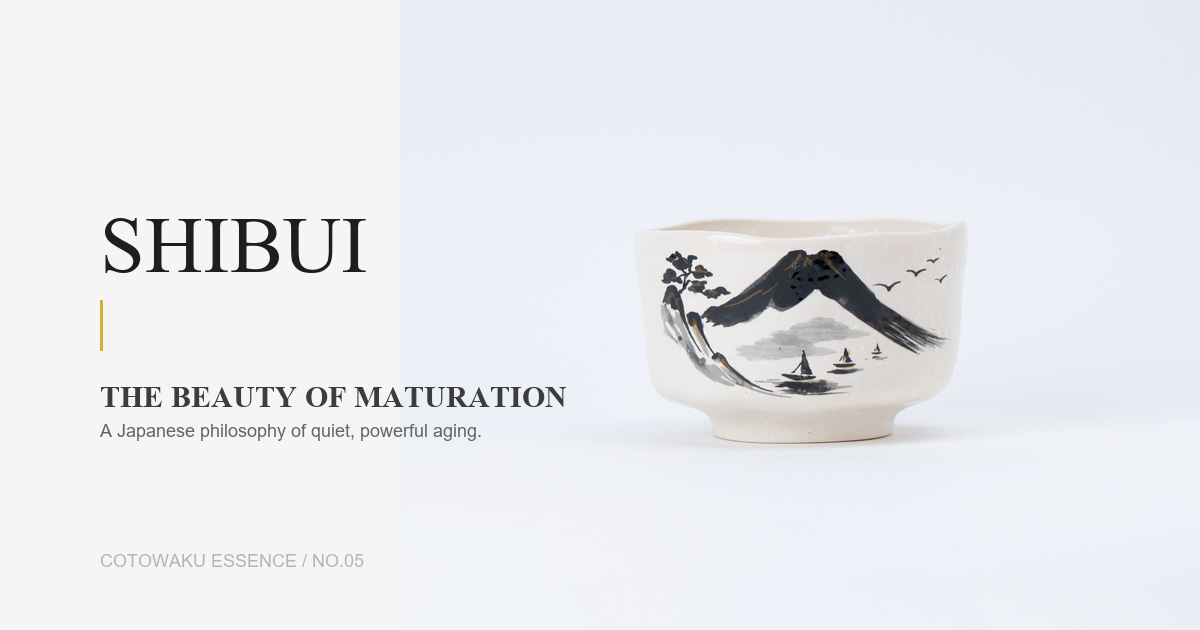
But if you enter the private collection of a Japanese billionaire art collector, you will see something absolutely baffling. They will have a ceramic tea bowl sitting behind a locked glass case that cost $10,000. And if you look closely at that $10,000 bowl... it looks completely deformed. It is asymmetrical, the lip is totally uneven, the glaze has violently dripped and hardened into thick lumps, and it looks like a crude rock dug out of the dirt. Why on earth do the Japanese assign the highest possible luxury value to something that looks completely broken and ugly?
The Answer: Perfection causes Anxiety (Wabi-Sabi)
The answer lies in the most famous Japanese Zen philosophy of all: Wabi-Sabi (侘寂). This is the profound belief that true beauty can only be found in imperfection, impermanence, and the massive, chaotic violence of nature.
To a Japanese tea master, a flawlessly symmetrical, perfectly painted, machine-made cup is considered terribly boring. It is dead. It possesses zero humanity. Being surrounded by perfect, flawless objects actually triggers deep psychological anxiety in humans, because humans are fundamentally flawed. When you hold a perfectly machine-made object, it subconsciously reminds you of your own terrifying imperfections.
But when you hold a Wabi-Sabi ceramic bowl that is slightly lopsided, you can literally feel the fingerprints of the artisan who made it. You see where the fire in the kiln violently and unpredictably melted the glaze. The bowl's "flaws" are proof that it survived a chaotic, brutal creation process—just like you. Holding an imperfect, Wabi-Sabi mug provides immediate psychological relief. It whispers to your brain: "It is okay to be slightly broken. You are still beautiful."
Recipe: The Wabi-Sabi "Rough" Matcha
You cannot drink an elegant, perfectly steeped, translucent Earl Grey tea out of a thick, deformed Wabi-Sabi bowl. The vessel demands a chaotic, earthy, intense drink to match its energy. It demands thick, frothy, violently whisked Matcha.
Ingredients:
- 2 heavy scoops of Ceremonial Grade Matcha powder
- 2 oz (60ml) of 175°F (80°C) hot water
- An incredibly heavy, asymmetrical, textured Wabi-Sabi bowl (Chawan)
Method (Embracing the Chaos):
1. Sift the green powder into the rough terrain of your clay bowl.
2. Pour the hot water in.
3. Take your bamboo whisk (Chasen) and do not be delicate! Whisk the tea aggressively in a zig-zag "W" motion for 15 seconds.
4. Lift the bowl to your face with both hands. Feel the incredibly rough, uneven rim of the ceramic against your lips. Let the harsh, astringent bitterness of the green tea wake you up, while the heavy weight of the lopsided clay entirely grounds your anxiety.

Tokoname Kiln-Transformed Teapot
This teapot defines the concept of "Yohen" (Kiln Transformation). The artisan surrenders complete control to the massive 1200-degree fire inside the kiln. The violent, chaotic burn marks across the clay cannot be replicated by any computer or machine; it is a 1-of-1 masterpiece created entirely by nature.
Shop Now
Crimson Lava Matcha Bowl (Chawan)
To a Western buyer, a thick, raised drip of glaze sliding down the side of a cup is a "manufacturing defect." To the Japanese tea master, that thick, hardened magma drip is the most beautiful, organic part of the bowl. Holding your thumb against that heavy crimson drip instantly grounds your anxiety.
Shop Now
Gold & Black Crescent Bowl
Absolute symmetry is boring. This stunning, aggressive black and gold bowl is violently lopsided, mimicking the terrifying beauty of a waning crescent moon. Eating a small meal out of an asymmetrical object forces your brain to stay present and actively engage with the weird, beautiful geometry.
Shop Now
Plum Blossom Matcha Bowl
Wabi-Sabi demands that objects look like they were pulled directly from the dirt, not printed in a sterile laboratory. The rugged, heavily textured beige clay of this Chawan begs to be touched with bare hands. You can feel the grit of the Japanese earth under your fingertips.
Shop Now
Morning Mist Chawan
Part of Wabi-Sabi is accepting that things fade away. The soft, blurry, bleeding gradient on this bowl looks like a thick morning fog burning off a Japanese mountain. The lack of sharp, defined, printed lines forces you to accept ambiguity and softness in your daily life.
Shop Now
Brushstroke Black Medium Bowl
Why do we crave hand-painted ceramics? Because humans crave connection. The stark, rapid, imperfect flash of white paint across this heavy black bowl captures the exact, breathless moment the artist swung their brush. It is a frozen record of human movement.
Shop NowThe Finale: Stop Trying to be Flawless
Our modern society has poisoned us into believing that we must be utterly flawless to be loved. We use digital filters to erase the pores on our skin, we furiously edit our social media to delete any mistakes, and we surround ourselves with cheap, sterile, perfectly symmetrical plastic furniture from mass-production factories. We are living in a terrifyingly sterile panic.
The 16th-century Japanese tea masters realized that this pursuit of perfection was a disease. They threw away the flawless, expensive Chinese porcelain and started drinking tea out of lopsided, cracked, brutally rough clay bowls pulled straight from local dirt fires. They realized that "ugliness" is just another word for survival.
If you constantly feel like you are failing to meet the impossible standards of the modern world, you must adopt Wabi-Sabi. Throw away your utterly boring, perfectly white, factory-printed coffee mugs. Buy a massive, heavy, lopsided, totally asymmetrical Japanese ceramic Chawan. Run your fingers over the bumps, the flaws, and the chaotic drips of hardened glaze. Realize that this "flawed" object is considered a staggering masterpiece in Japan. And then realize that you are exactly the same.