In the midst of the urban hustle, moments of silence allow us to truly perceive the subtle shifts of the seasons.
The spirit of Japandi—which finds beauty in the imperfect and the present moment—resonates deeply with the essence of a Japanese spring, where one finds serenity in the soft light and the ephemeral dance of falling cherry blossoms. It is more than just an interior trend; it is a mindful way of living.
But here, a question arises: Why do we often find a deeper, more profound beauty in formless things—like petals drifting on the wind or the veil of spring mist—rather than in the flowers in full bloom?
The answer lies in our reverence for the "present moment," a perspective gained only when we sharpen our five senses.
1. Welcoming the Esthetics of Impermanence
In a Japandi-inspired life, tableware is part of the landscape. Rather than relying on literal patterns, we invite the spirit of spring through texture and form.

Sakura Petal Drift Rectangular Plate
This rectangular plate abstractly captures the trajectory of petals drifting on the breeze. Its elongated form evokes a "path for the wind," while the generous blank space brings the fleeting afterglow of falling cherry blossoms to your table. It transforms any dish into a poetic narrative.

Sakura Bloom Scalloped Plate
The scalloped edges, reminiscent of cherry blossom petals, create a rhythmic beauty like ripples on a pond. The delicate texture, which softly absorbs light, feels as though the gentle spring sunshine has taken physical form. Adding these organic curves to linear Scandinavian furniture creates a sense of peaceful harmony.
2. Embracing the Serenity of "Spring Mist"
On a spring morning, the landscape often blurs into a soft white veil known as "Kasumi" (mist). We capture this abstract beauty within the depth of a bowl.

Sakura Mist Square Bowl
True to its name, the "Sakura Mist" bowl features a soft, blurred palette where boundaries seem to melt away. Its modern square shape, combined with the subtle fluctuations of artisanal handiwork, embodies the heart of Japandi. It highlights the vibrant colors of seasonal ingredients as if they were emerging from a spring fog.
3. A Personal Moment: Opening the Window to Spring’s Breath
Every year when spring arrives, I have a personal ritual. Immediately upon waking, I open the window wide to let the soft spring breeze wash over me.
The air is a world away from the sharp, piercing winds of winter; it is warm, gentle, and soothing. In that air, I catch the scent of the earth and the faint aroma of blossoms, feeling the powerful surge of new life beginning to move. Just feeling the wind—this few minutes of mindfulness thaws a heart hardened by the daily rush and gently restores my sense of self.
4. The Rituals of Unveiling and Whisking

Painted Sakura Chawanmushi Lidded Bowl
The moment you lift the lid, the trapped aromas of spring are released. The delicately hand-painted blossoms serve as a trigger for memories of full bloom. Its rounded form fits perfectly in the palm, elevating a "Hygge" moment into something profoundly warm and rich.
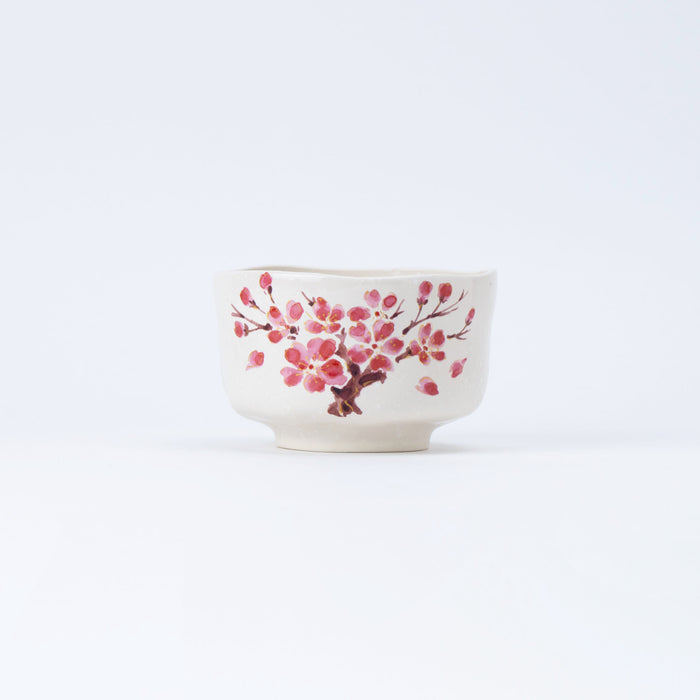
Sakura Cherry Blossom Matcha Bowl
Whisking matcha is the ultimate Japandi mindfulness practice. Savoring a bowl of tea alongside these painted blossoms allows you to cherish both the fleeting season and the present moment in one shared experience.
Insight: Why is the "Moment of Falling" So Beautiful?
Returning to our earlier question: the Japanese people cherish "ephemerality" because of the spirit of "Ichi-go Ichi-e" (once-in-a-lifetime encounter). This Zen-rooted teaching from the tea ceremony reminds us that this exact moment will never happen again.
Furthermore, the spring wind is not seen as a cruel force that scatters the flowers, but as the "Hana-okoshi" (flower-awakening) breeze—a force that stirs new life into the next season. All things of form eventually fade; that is why we treasure the warmth of the here and now. When you choose your tableware with a Japandi heart, a rich, invisible spring breeze will surely blow through your dining room.